
Run on wet grass, get your clothes dirty, follow a little bird, imagine what the clouds in the sky look like. Such simple activities - taking kids out into nature, outdoors - are increasingly being neglected by families.
Uma OnePool consultancy research, held in 2022, brings a good dimension to the theme: British children of the current generation play outdoors 62% less than their Baby Boomer grandparents, born between 1956 and 1964.
The explanations for this change in play style are due to the high urbanization of cities, the fear of violence outside the home, and the rise of technology, which leaves children tied to screens.
But disregarding activities outside the home and leaving smartphones or tablets in charge can cause children to suffer from anxiety, attention difficulties, and hyperactivity—especially those with parents who abuse the connection, as revealed by one University of Calgary research, in Canada, published in 2024, made with children from 9 to 11 years old.
That's why it's time to put on the sneakers and get out of the house with the little ones, taking the kids out into nature. And you don't need that much time: 1 hour a day outdoors is ideal for child well-being, according to the recommendation of the Brazilian Society of Pediatrics and the Alana Institute, who sign the document together The Benefits of Nature on the Development of Children and Adolescents, last updated in 2024.
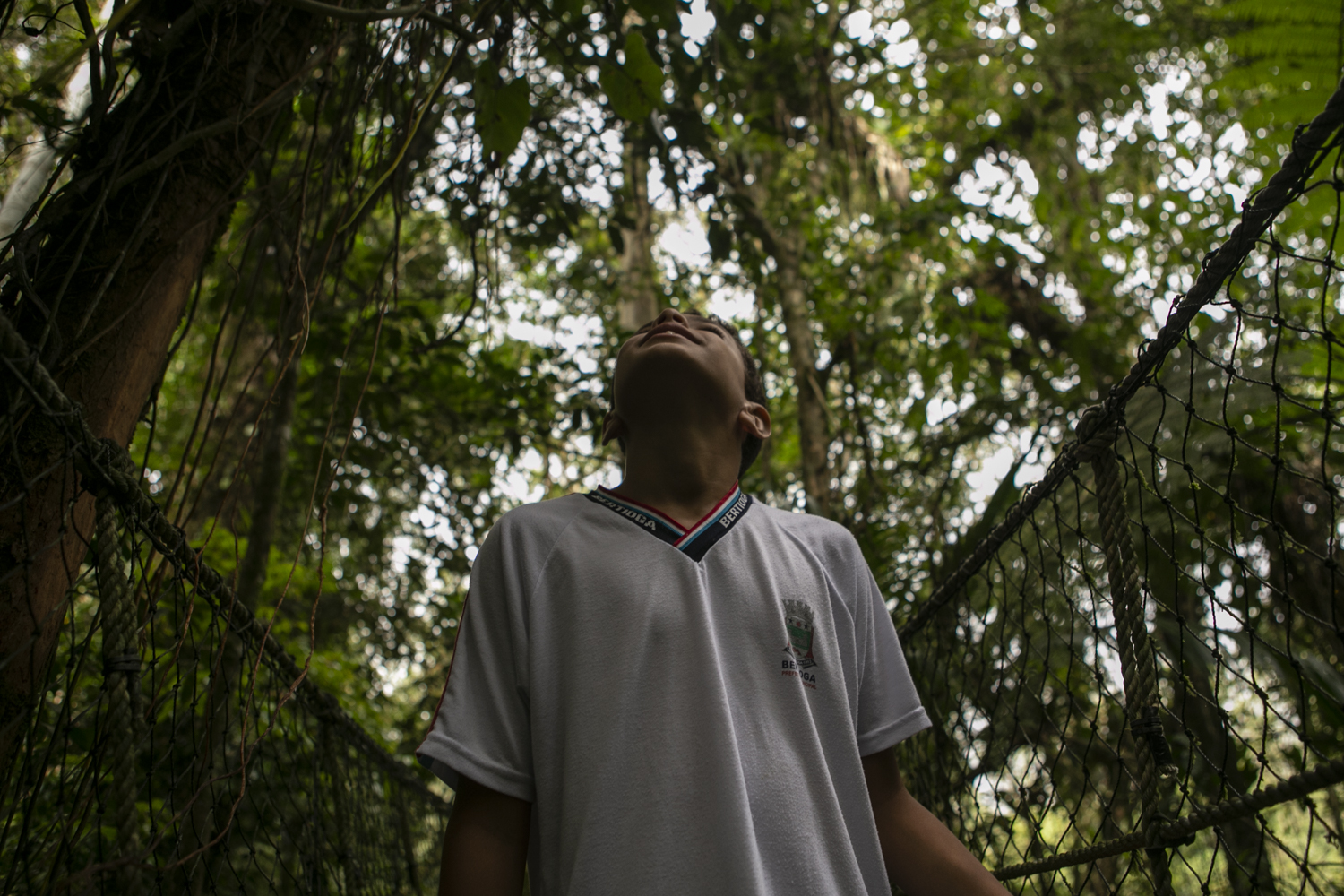
Understand the importance of contact with nature for child development
Outdoor activities with children playing in nature help with physical, emotional, social, and cognitive development. After all, nature provides a diversity of textures, smells, colors, and sounds that stimulate children's senses.
“Our development is closely related to the experiences we experience, and sensory experiences are also part of this,” says Larissa Fonseca, a psychopedagogue, neuropsychologist specializing in child and adolescent behavior and author of the book Mother's Doubts (Editora Pá de Palavra/Parábola).
Valéria Blos, director general of EcoFuturo Institute, a non-governmental organization maintained by Suzano and dedicated to education and environmental conservation, completes the explanation: “Listening to the sounds or setting foot in the water of a river broadens children's sensitivity. This opens a space for creativity, for individual expression, and for self-knowledge.”
Another advantage of playing with children in nature is that they explore their own movements. When running, jumping, and walking on different reliefs, they develop motor coordination and feel more secure. “As they overcome physical challenges, they gain confidence in their abilities,” Larissa says. “When they are in a closed environment for a long time, they become insecure because they don't have the opportunity to experiment with movements.”
When there are other children on site, contact in a new environment also helps promote teamwork and strengthen social skills, such as speech, reasoning skills, and respect for differences. In addition, time spent with the family - such as father, mother, brothers, uncles and cousins - strengthens emotional bonds.
In addition to playing in contact with the environment, family members can encourage sustainability in children with the use of recyclable toys.
The benefits of nature for children's health
Taking children into nature and providing this contact with the environment provides several physical and mental benefits:
Physical health
Children's contact with nature is an important ally for maintaining children's health. “Exposure to different elements, such as leaves, earth, and flowers, for example, helps strengthen the immune system and prevent allergic reactions in the future,” explains Larissa.
Contact with the sun - always with the use of protection - is also important for the development of the bone part, since this is how the body synthesizes vitamin D, an important element for the absorption of calcium and phosphorus.
Being in an external environment combats sedentary lifestyle, promoting cardiorespiratory strengthening and muscle development.
Mental health
And the simple fact of seeing trees, plants, and animals brings a sense of well-being, which helps reduce everyday stress - which, yes, even children can feel. “The sensations that nature causes lower the level of cortisol, the stress hormone, and help reduce anxiety,” Larissa says.
Our ability to concentrate also wins out. Because it's not an environment as overwhelmed with information as a cell phone screen or a mall, the natural world helps us enter a more relaxed and focused state. “The connection with nature can even help those children who have difficulty sleeping,” says Valéria.
Practicing freer activities, without pre-determined rules, is also important for mental health. “Kids are no longer used to boredom. But doing nothing is a window for imagination and creativity, especially in nature,” says Valéria.
The environment as a learning space
“For teachers, taking kids out to nature can be a way to stimulate new connections with what the class is studying,” Larissa says. “It's about making the external environment a learning space”.
That's because nature is a powerful educational agent. No Parque das Neblinas, the Suzano environmental reserve, managed by the EcoFuturo Institute, with 7,000 hectares of Atlantic Forest, there are initiatives to connect students and teachers to socio-environmental issues - which encourages reflections that go far beyond learning about plants and animals.
“We learn not only about nature, but about ourselves and about others,” says Valéria. In addition, contact with nature helps even with issues that are not directly related to biodiversity. “We have seen mathematics teachers, for example, using the experiences and instruments of the environment to teach the subject,” he says.
After all, the elements available in natural spaces, from a pebble to a large tree, help a lot to create. This helps not only to develop autonomy and self-confidence, but also to solve problems and form new neural connections.
In addition, of course, to being a powerful way to encourage awareness of the importance of protecting biodiversity. “We only care for what we know and love, and children awaken that feeling of affection through freedom in contact with nature,” explains Valéria.
Also read
5 attitudes for sustainable living
Examples of outdoor activities to integrate children into nature
Taking kids outside more often can be a challenge. “Many parents I serve say that their children don't want to go outside, they prefer to stay home,” Larissa says. “But that's because the kids haven't lived enough with the pleasures of being outside yet.”
According to her, once the little ones begin to discover this universe, they end up learning to like it. “When parents promote this possibility, play becomes an incredible ally for children to leave the screens.”
Here are some tips to promote this behavior:
Set aside time on the schedule
With the daily hustle and bustle, we often end up leaving aside moments of pause and play with the children. Therefore, the tip is to schedule these moments just as we do with other appointments, such as school or a doctor's appointment.
But it doesn't always have to involve big trips: a garden next to your house, a small square, or exploring the trees and flowers on a street can be an opportunity to spend time away from home.
Stimulate the senses
To encourage a child to connect with nature, it is worth helping them to awaken their senses. “Ask her to close her eyes and feel the texture of plants, grass, or pay attention to sounds,” Valéria says. “Or ask how many butterfly colors she saw, what flowers she found.”
Observing fruit trees — and even trying or playing with a fruit — is another way to awaken the connection. The possibilities are many and this can be a process of joint discovery between parents and children.
Encourage imagination
As important as it is to give children freedom to discover games and games, it is possible to give a little push. “Giving ideas for playing outdoor treasure hunts or playing the little yellow one allows the child to do this independently later,” explains Larissa.
Diversify activities
Bike rides, sports like volleyball and soccer, hiking, swimming, picnics, or even spending the day reading and lounging on a lawn — these are just a few examples of what you can do outdoors.
Varying activities is important not only for children, but for caregivers themselves to feel more engaged and motivated to spend time outdoors.
Conclusion: being close to nature is good for you
The connection with nature is a powerful tool for child development, in addition to being important for strengthening the physical and mental health of children - and of the bonds between families.
How about starting to put this commitment to green spaces in your schedule and that of the girls? If you want to combine learning and fun, a tour of Parque das Neblinas, which includes activities such as hiking, cycling and canoeing, is a great choice. Check out the schedule at Park schedule.
.svg)