
Every year, at least 27.7 million tons of recyclable waste are produced in Brazil. But only 4% of this total, on average, is recycled in the country, according to data from Brazilian Association of Public Cleaning and Special Waste Companies (Abrelpe).
The rest ends up in landfills or dumps, polluting the environment, increasing the emission of greenhouse gases and seeping toxic substances, such as microplastics, into the groundwater. A single PET bottle, for example, takes more than 450 years to decompose, according to United Nations Organization (UN). Imagine, then, the effect of tons of materials like this dumped every year, decades ago.
Recycling, in turn, saves natural resources, such as water and oil, and reduces the emission of gases responsible for global warming. For Hugo Coutinho and Mariana Almeida, from the Recicleiros Institute, in addition to infrastructure difficulties and the lack of industries specialized in recycling, Brazilian culture needs to change. “Even where there is infrastructure and public policies for recycling, we have a membership that remains to be desired,” they say. “Awareness is still a major bottleneck.”
But you can do your part now by adopting some simple habits and better understanding what can — and what can't — be recycled.
After all, what can we recycle?
In addition to the most well-known materials, such as PET bottles and aluminum cans, other recyclable items are paper boxes and packaging, copper wires, cordless pans, marmitex, magazines, plastic bags, and others.
When in doubt about what is recyclable, it is best to consult local cooperatives and visit official websites in your city or state. The symbols on the packaging indicating the type of waste, on the other hand, may not be the best criterion. “Some companies take advantage of loopholes in the legislation and say that a package is recyclable only because it is composed, in part, of a recyclable material,” say Hugo and Mariana, from Recicleiros. “But in practice, they're not recycled.”
10 tips for recycling waste
Separating and recycling waste are important actions, but adopting this practice may raise some doubts. That's why we've listed the main tips on how to recycle waste properly to help you incorporate more sustainable habits into your daily lives.
1. What's the difference between organic and recyclable waste?
Not all wastes are the same and we need to understand their differences to dispose of them properly. There are four types of waste:
Organics: these are the remains of food and beverages. Even though they are biodegradable, the excess contributes to the formation of methane and slurry, toxic and polluting by-products. Therefore, to discard consciously, try not to buy more food than necessary, prepare smaller portions and freeze leftovers. Another solution for organic waste is composting, a kind of natural recycling, which transforms this waste into fertilizer.
Rejitos: waste that, once used, cannot be recycled or reused, such as disposable diapers and toilet paper.
Specials: wastes that may be toxic or dangerous, such as medicines, electronics, and batteries.
Recyclable: materials that can be transformed into new products.
When in doubt about what is recyclable, it is best to consult local cooperatives and visit official websites in your city or state. The symbols on the packaging indicating the type of waste, on the other hand, may not be the best criterion. “Some companies take advantage of loopholes in the legislation and say that a package is recyclable only because it is composed, in part, of a recyclable material,” say Hugo and Mariana, from Recicleiros. “But in practice, they're not recycled.”
2. Do you need to wash the packaging before recycling?
Yes. Until it is recycled, the waste goes through several stages involving people - from the collector of your building to the member responsible for the final separation. And washing helps and makes the work of these professionals better. In addition, depending on the time between disposal and recycling, leftover food can damage the material, making it impossible to recycle.
For waste pickers, selling dirty material decreases the sale price and, in cooperatives, the need for cleaning makes the process more expensive and less efficient.
So, the tip is to always wash and dry beverage and wet food packaging. Dry food packages, such as rice and pasta, don't need to be washed.
3. How to recycle at home?
The first step is to separate waste between recyclable and non-recyclable, since the final sorting is usually carried out in the cooperatives themselves. If your building has dumpsters to separate by materials, do this sorting at the time of disposal.
To find out the type of collection and the days of selective collection on your street, check with your city hall. In São Paulo, for example, more than 75% of roads already have selective collection, according to Recicla Sampa.
Special wastes such as medicines, cooking oil, and electronics must have a different destination (see topic 8). Did you break a glass? Take great care to dispose of: place in a container that does not harm the people who handle the disposal.
Also check out options for easy recyclable toys to involve children in educational and sustainable activities.
4. What to throw in each recycling bin?
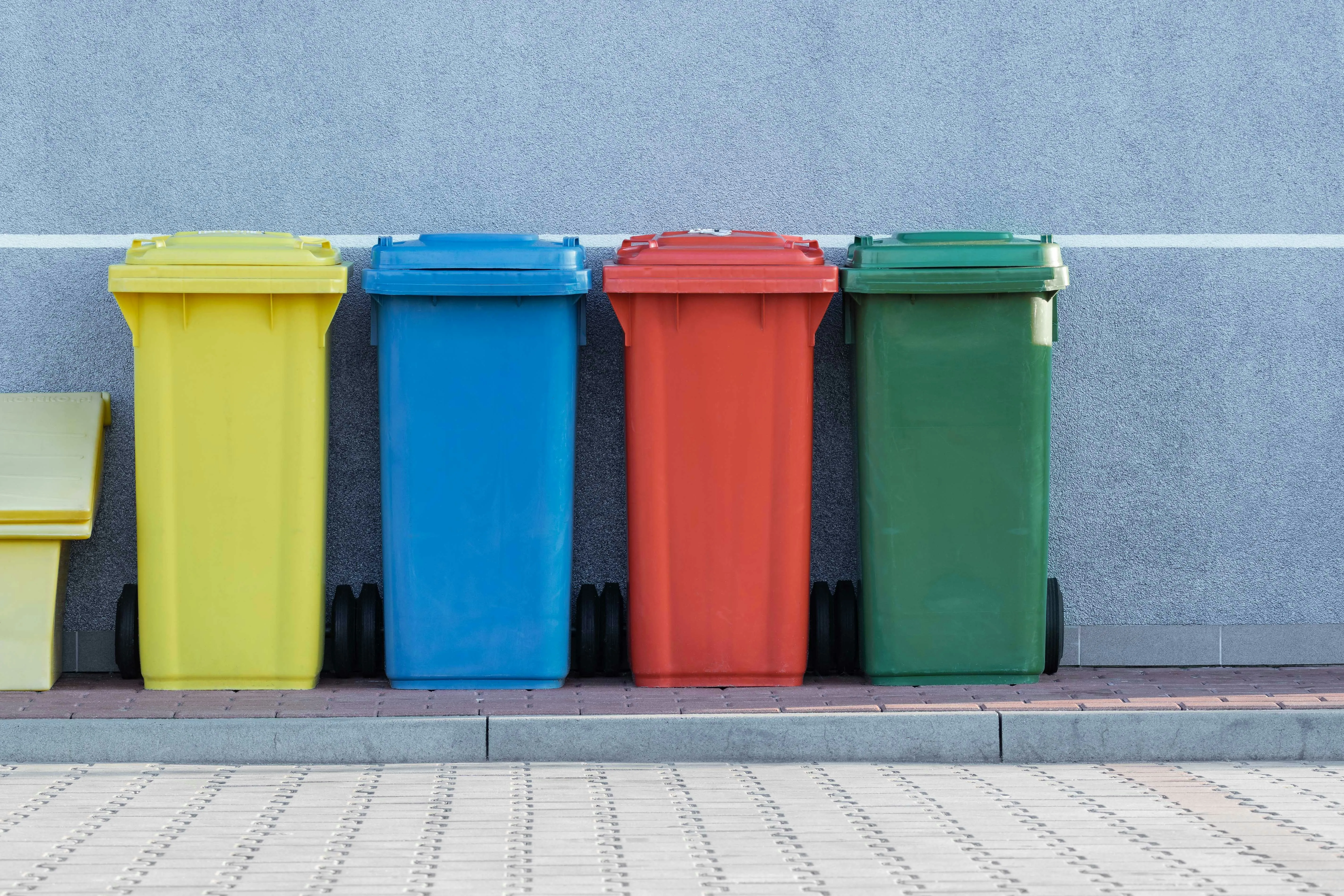
Photo: Pawel Czerwinski/Unsplash
In many locations, there are colorful recycling bins - each containing a different type of material. Check it out below.
Blue: paper and cardboard. Examples of items: notebooks, books, magazines, and papers in general
Red: plastic and styrofoam. Examples of items: clean plastic bags, PET bottles, cleaning product packaging
Verde: glass. Examples of items: glass jars and bottles
Amarelo: metal. Examples of items: soda cans, bottle caps, clips
Marrom: organic. Example items: food scraps
Grey: non-recyclable or mixed. Examples of items: used toilet paper and napkins, heavily soiled and contaminated packaging
5. How to recycle outside the home?
When out on the street, the ideal is to store the recyclable items until you can dispose of them in an appropriate place, as common public waste bins are rarely screened. In malls and businesses, use recyclable waste bins, as these places are required to collect waste properly. And if you really need to dispose of common waste, look for biodegradable packaging - such as paper.
6. What to do if there is no selective collection in your city?
Look for voluntary delivery points, such as ecopoints at malls and supermarkets, or contact recycling cooperatives, which can pick up the materials or allow delivery on specific dates. “Another possibility is to talk to an autonomous collector, who can stop by your house to pick up the recyclables that interest him,” says Recicla Sampa.
7. Products that look recyclable but aren't
Recycling depends on factors that go beyond the material itself. One of them is the concept of “recyclability”, which defines whether a material is worth recycling. According to Recicla Sampa, styrofoam is an example. The material is recyclable, but it is not recyclable because the process is very expensive.
Other aspects that influence recycling are material size (very small ones are difficult to recycle) and contamination of other materials, which requires complex chemical separation. And sometimes, the recycling process may end up impacting the environment more than the production of new raw materials.
Check out some materials that are not recyclable:
- Sachets of sauces such as ketchup and mustard
- Snack and cracker packaging
- Pan handles
- Metallized or plasticized papers
- Foam
- Steel sponges
- Photographs
- Adhesive labels
- Ceramics
- Mirrors
Read more
What are Suzano's commitments to sustainability?
8. How to dispose of electronics and other special waste?
Computers, cell phones, refrigerators and toasters, among others, cannot be disposed of in household waste. To dispose of properly, look for specific collection points for these materials or companies and NGOs that have collection programs - some even pick them up free of charge from your home.
Other wastes that need to go to collection points are: wood, medicines, batteries, and cooking oil. It is common for supermarkets to have places to collect used cooking oil and pharmacies usually have special waste for batteries and medicines.
9. How to reuse materials?
Before discarding a material, research that there are no other uses you could make. In many cases, you can reinvent yourself. Check out some suggestions.
- Ice cream jars: Use to store food in the freezer
- Glass bottles and jars: it is possible to store food and drinks, use as plant pots or lamp base
- Toothbrush: can be used for household cleaning in general
- Silica bags: they can be placed to dehumidify small spaces in your house, such as drawers
- Caixotes de Feira: it is possible to use them to build small furniture, such as shelves and side tables
10. By recycling, you help the planet and people
The impact of recycling is positive not only for the preservation of the environment, but also for the lives of those who work with it. In Brazil, according to the National Movement of Waste Pickers (MNCR) it is estimated that around 800,000 people earn their livelihood through the collection of recyclables - and change their social status.
So much so that recycling cooperatives are a great support point for people in vulnerable situations, who have difficulty entering the formal market. “Cooperatives are incredible tools for social inclusion,” says Recicla Sampa. “These are people in vulnerable situations, whether social or psychosocial, that the cooperative brings inside, creates a network of solidarity, gives dignity,” says Recicla Sampa.
Suzano supports this ecosystem with an inclusive recycling program, part of its initiatives of Social Development (learn more here). Through partnerships in various regions of Brazil, the company invests in the training of waste pickers who are part of cooperatives or who act independently. This helps to strengthen cooperatives, to encourage more demand for materials and to coordinate with the public authorities to contribute to income generation and to the development of the Circular Economy. The Recicle Aracruz project is an example. The initiative encouraged a cooperative that collects at the Suzano plant in Aracruz, Espírito Santo, to increase its income by 91% in two years.
.svg)